
The core argument
Being organized has always been the real constraint — not talent, not tools, not strategy. We've been getting away with it for decades. That era is ending. But for the first time, the gap between what gets done and what gets documented is closeable — without requiring anyone to change who they are.
I keep seeing the same word on my LinkedIn feed. Architecture. Good architecture. Sound architecture. Scalable architecture. Data architecture. AI architecture.
It's everywhere. And almost nobody outside the IT world knows what it means.
Here's what it actually means: being organized. That's it. Knowing where things are. Knowing how things connect. Having your information structured in a way that someone other than the person who created it can actually find it, use it, and build on it.
And here's the uncomfortable part: almost no one does this well. Not people. Not teams. Not companies. Not the ones with the biggest budgets, not the ones with the best reputations, not the ones who talk about it the most.
Let's Be Honest About This.
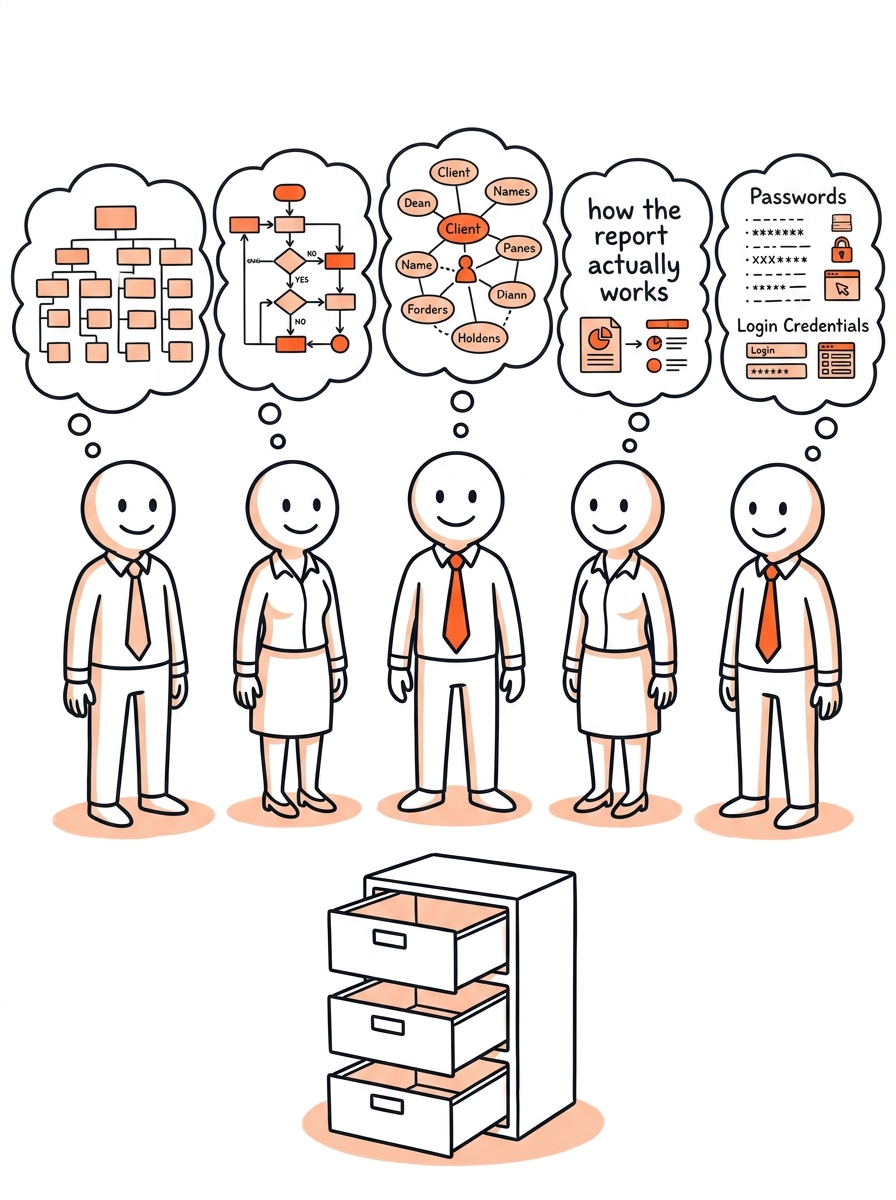
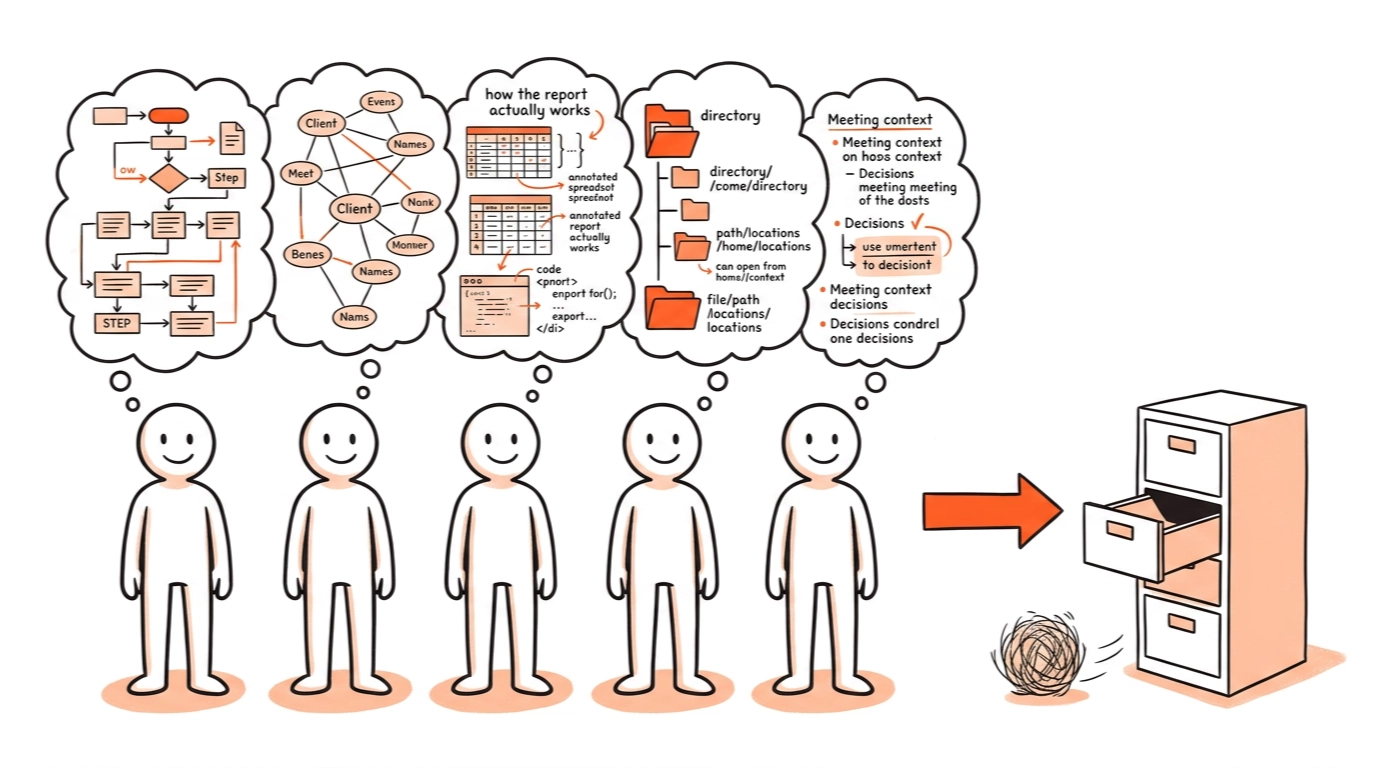
Every company knows that knowledge lives in people's heads. Most have accepted it as a cost of doing business. We hire smart people, hope they stay, and scramble when they leave. The onboarding for their replacement takes months — not because the new person isn't capable, but because the knowledge wasn't organized. It was performed. Enacted daily in meetings, in relationships, in hallway conversations that shaped decisions that shaped outcomes that shaped the company.
None of it written down.
This Has Always Been the Problem. We Just Got Away With It.
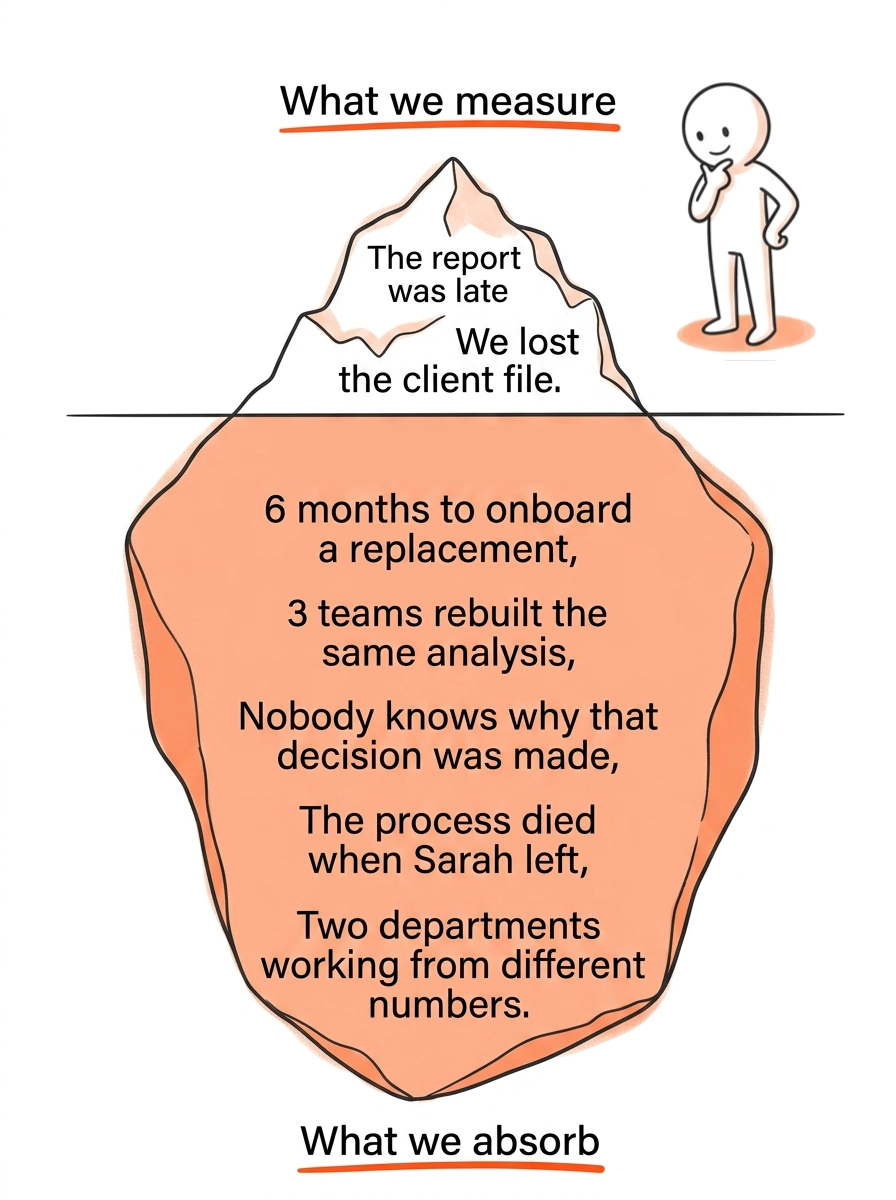
The cost of disorganization was diffuse. Slow. Hard to attribute. When a key employee left, the replacement took six months to get up to speed — but nobody tracked that cost explicitly. When a team couldn't find the report they needed, they rebuilt it — but nobody measured the duplication. The disorganization tax was real. It was just invisible enough to ignore.
So we developed workarounds. The person who "knows where everything is." The team lead who holds the context in their head and translates between departments. The employee who built a shadow system — a personal spreadsheet, a private Notion page — because the official system didn't work for them.
These aren't failures of individual discipline. They're rational adaptations to an environment that never prioritized organization in the first place. And every single one of them made the knowledge more personal, more fragile, and more likely to disappear.
The Gap Just Became Visible.
For the first time, technology actually needs your organization to be in order. Not your people — your information. Your processes. Your knowledge base.
Every tool that promises to transform how you work — every AI assistant, every automation platform, every agent — runs on the same fuel: organized, accessible, structured knowledge. Context. Information that's findable, current, and connected to the decisions it supports.
And most companies don't have that. Not because they didn't try. Because they never had to.
This is the quiet reason most AI initiatives stall. Not because the technology doesn't work. Not because the models aren't good enough. Because the knowledge they need to work with was never organized in the first place. The AI is fine. The environment it's operating in is the constraint.
The disorganization that was invisible for decades just became the most expensive problem in the building.
Here's Why It Doesn't Matter Anymore.
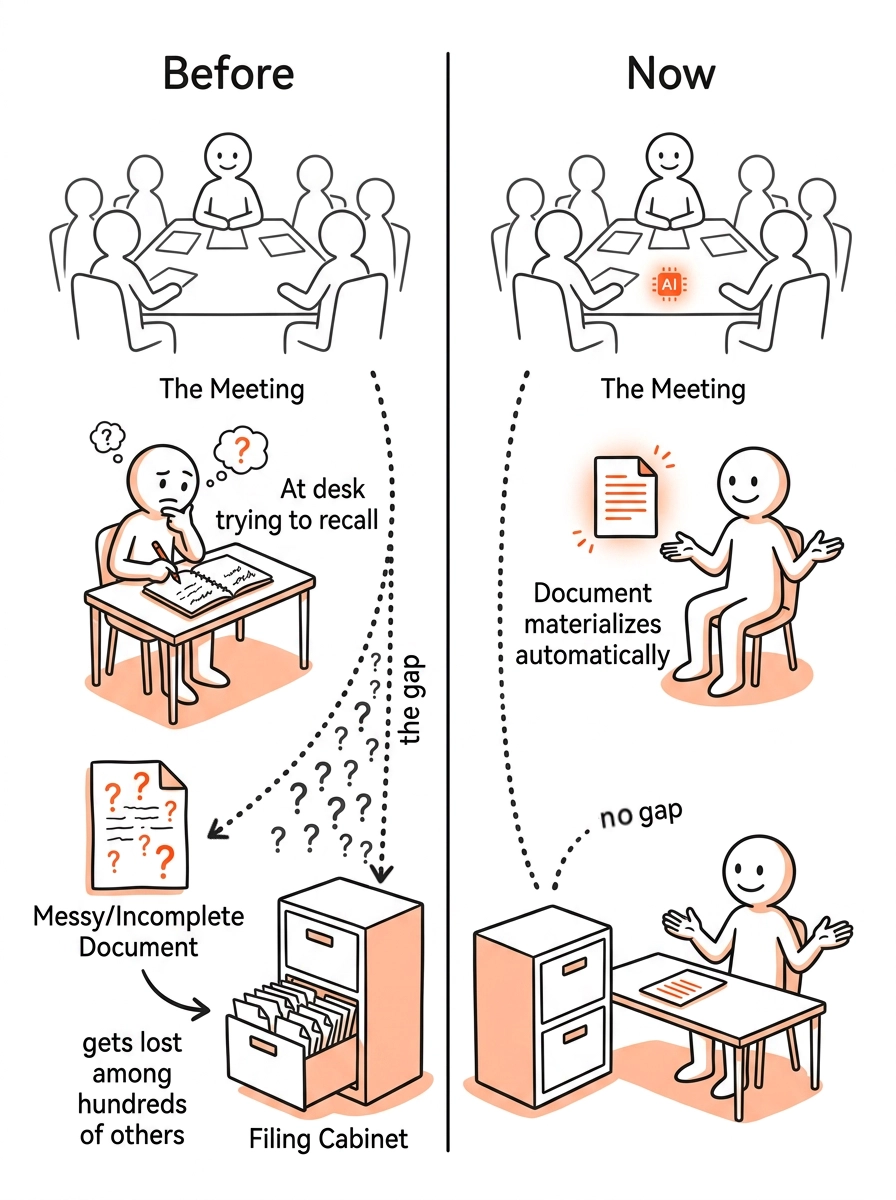
The same technology that exposed the gap is also the first technology in history that can close it — without requiring the humans to change.
Meeting transcription tools that capture every conversation automatically. AI assistants that summarize discussions, extract action items, draft follow-up documents. Systems that turn a conversation into a structured record without anyone stopping to take notes.
For the first time, the gap between something happening and that thing being documented is collapsing. Not because people got more disciplined. Because the documentation became a byproduct of the work itself.
The person who's not great at organizing? Doesn't matter. The meeting happened. It got captured. The knowledge exists outside their head now — searchable, retrievable, connected to everything else.
That's not a productivity gain. That's a paradigm shift.
The Person Gets Better. Not Because They Changed.
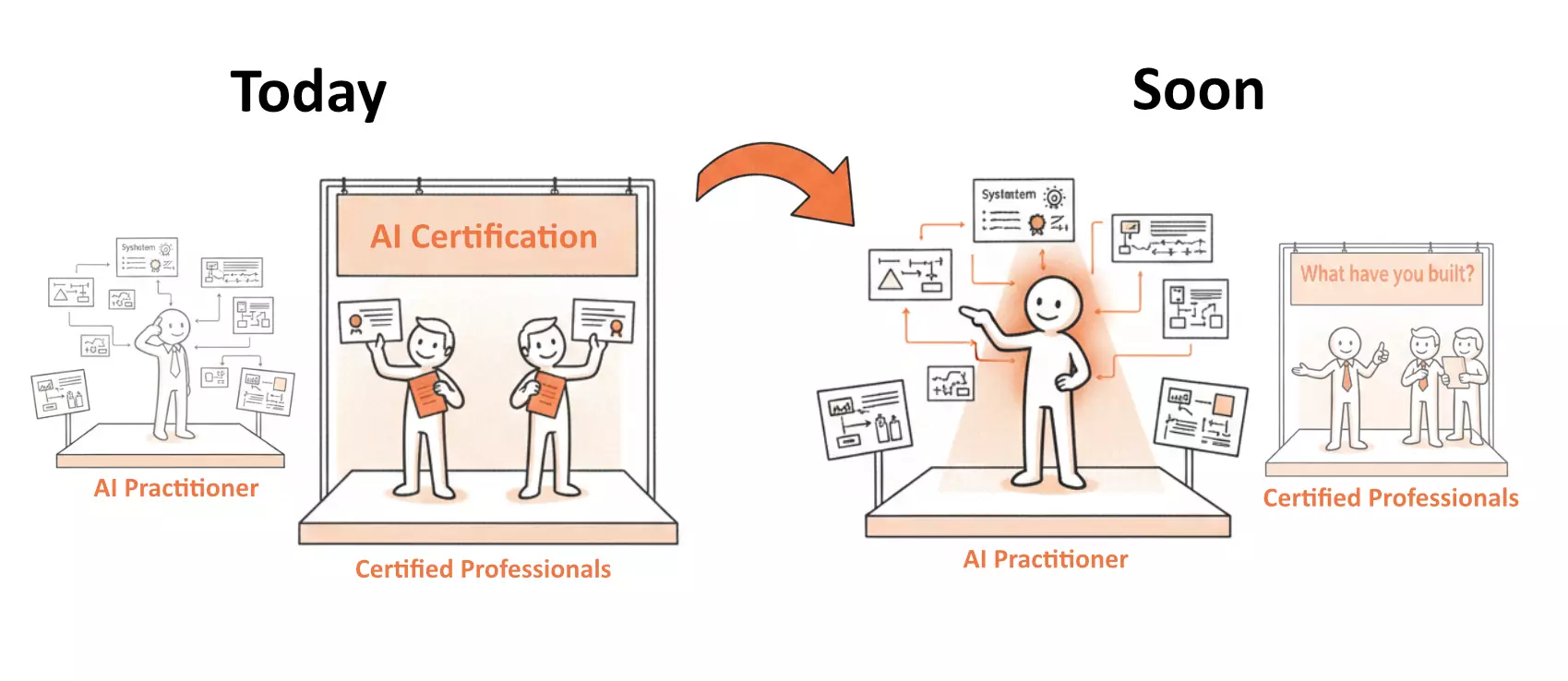
When the documentation layer runs on its own — when the knowledge capture happens automatically — the human gets to stop compensating. They get to be fully present in a meeting instead of half-present and half-documenting.
Remove that overhead and something shifts. The person who was "disorganized" — the one who always had brilliant ideas but terrible follow-through on documentation — suddenly has a complete trail of everything they've done. Not because they became more organized. Because the environment organized itself around them.
The Organizational Unlock Nobody's Talking About.
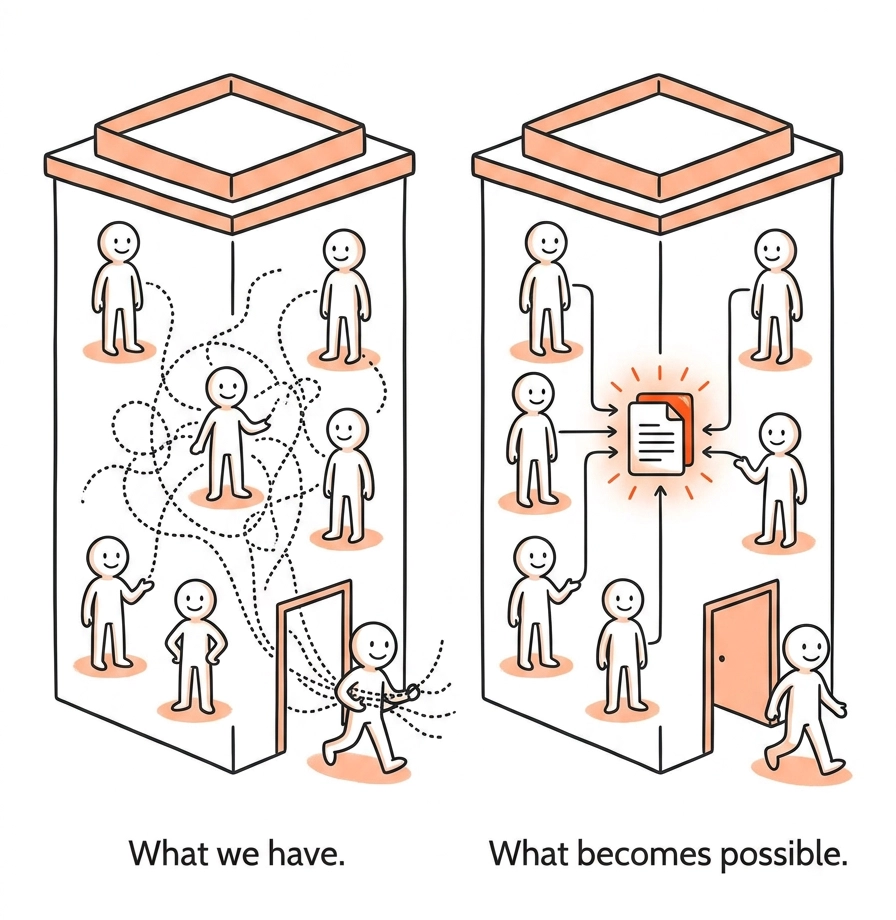
If every meeting is captured. If every decision has a trail. If every piece of work produces a document — not a status flag, not a Slack message, but an actual, findable artifact that records what was done, what was decided, and why.
What happens?
Something that's never existed before: the organization's actual operating system, made visible.
Not the org chart. Not the process documentation that was written three years ago and never updated. The real thing. The living, breathing way the company actually makes decisions, allocates resources, resolves conflicts, serves clients, and develops its people.
Right now, all of that is invisible. Emergent. Unwritten. When people leave, it degrades. When teams change, it fractures.
Now imagine that performance is being captured. Continuously. The conversations that shaped a strategy. The data that informed a pivot. The reasoning behind a budget allocation. The pattern of how client escalations actually get resolved versus how the manual says they should.
That's not just better documentation. That's the organization becoming legible to itself for the first time.
Two Problems Nobody Has Solved Yet.
The first problem is retrieval. Capturing knowledge is only half the equation. The other half — the harder half — is finding it again. Marketing creates a folder structure that makes sense to Marketing. Finance creates a different one. Now there are two versions. Neither is current. The person who "knows where the real one is" just went on parental leave.
The second problem is structure. Even if you solve retrieval, there's a deeper question: how do you ensure that the knowledge base isn't just a pile of documents, but a connected system where decisions link to evidence, processes link to outcomes, and changes are traceable over time? A flat dump of meeting transcripts and AI summaries is a landfill with a search bar.
The capture problem is being solved. The retrieval and structure problems are where the real work — and the real opportunity — lives.
Being Organized Was Never About Discipline. It Was About Design.
The companies that are well-organized didn't get there because they hired more disciplined people. They got there because they designed environments where being organized was the path of least resistance. Where documentation was a byproduct, not an additional task.
Stop asking "why aren't our people more organized?" Start asking "what would our environment need to look like for organization to happen automatically?"
For the first time, that question has a real answer.
Ask yourself one question. If your three most knowledgeable people walked out tomorrow — not the most senior, the most knowledgeable — how much of what they carry in their heads exists somewhere the rest of the company can access?
That's the gap. And for the first time, it's closeable.