
The core argument
The problem isn't that your teams aren't aligned. The problem is that they're aligned to different environments — each one optimizing rationally for the signals their local incentive structure sends. The result isn't chaos. It's coordinated dysfunction. And it was never going to be fixed by a new tool, a new hire, or a new strategy deck.
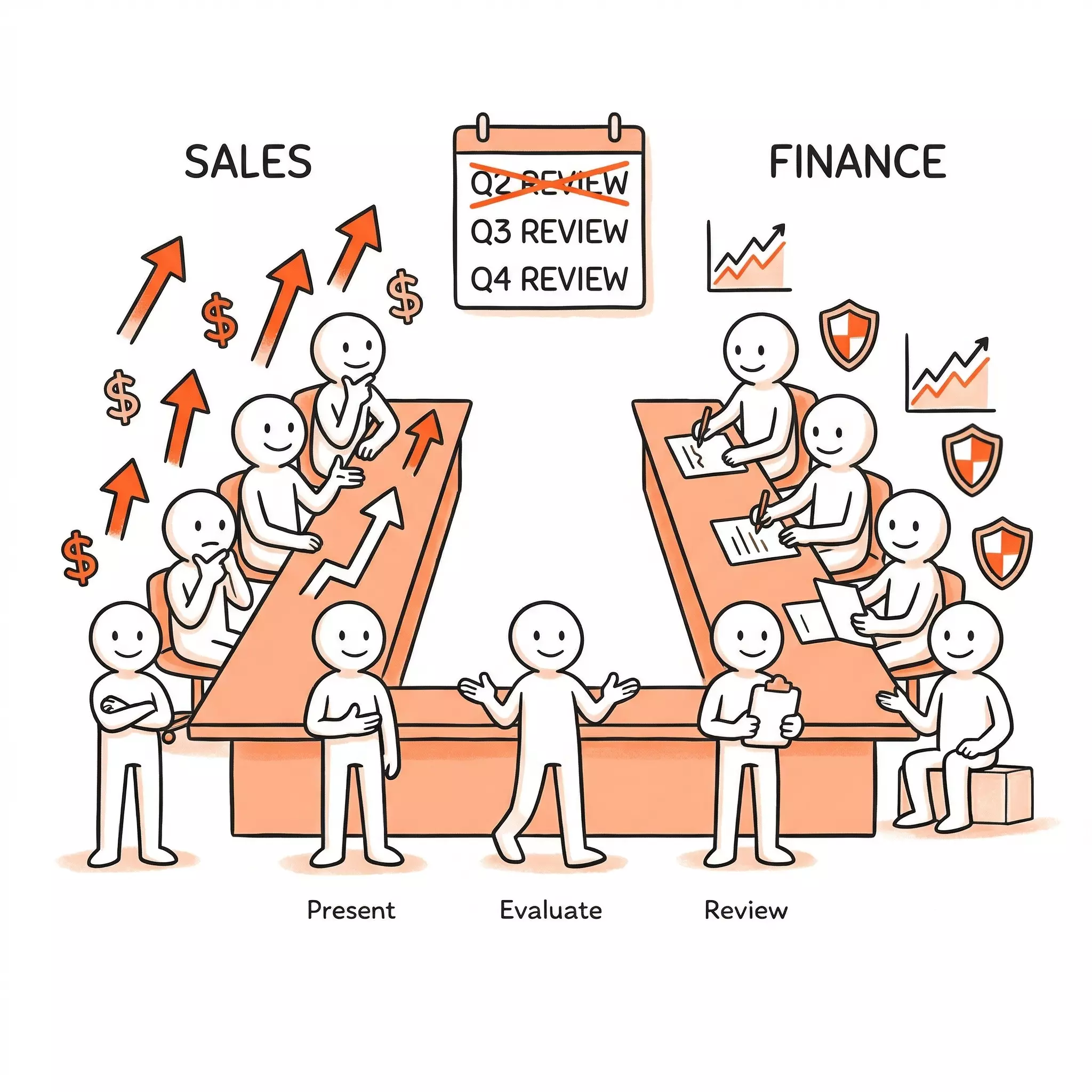
There's a meeting that happens in most organizations approximately once a quarter.
Sales is in the room. Finance is in the room. Sometimes Operations. Sometimes the CEO. The agenda varies but the conversation doesn't. Revenue is up but margin is flat. Or margin improved but the pipeline is thin. Or the quarter was fine but the forecast is uncertain. Somewhere in the room, someone has a slide that shows the gap between what was expected and what happened. And somewhere in the conversation, the same unresolved tension surfaces: sales wants to close deals, finance wants to protect margin, and both of them are right.
The meeting ends. Actions are assigned. The same conversation happens again next quarter.
If you've been in that meeting — or a version of it involving any two functions that seem structurally incapable of agreeing — this piece is about why it keeps happening. Not because the people are difficult. Not because the data is unclear. Because the environments those two functions live in were never designed to point toward the same outcome.
The Mechanism Nobody Names.
Most organizations diagnose this as a communication problem, a culture problem, or a leadership problem. The functions aren't talking to each other. The leaders aren't aligned. The incentives are off.
That last one is closest. But it still misses the actual mechanism.
The problem isn't that your incentives are off. It's that your incentives are working exactly as designed — for each function individually. Sales is doing what the commission structure rewards. Finance is doing what the board measures. HR is doing what the budget cycle incentivizes. Operations is doing what the delivery SLA requires.
Every team is optimizing rationally. Every team is doing the right thing for the environment they live in. The dysfunction isn't coming from any individual failure. It's emerging from the interaction of multiple locally-correct behaviors inside a system that was never designed to make those behaviors globally coherent.
This is not misalignment. This is coordination — just not toward the same outcome.
Call it what it is: Coordinated Dysfunction.
Not chaos. Chaos would be easier to diagnose. Not laziness or bad faith. Not a failure of communication or culture or leadership, though all of those may appear as symptoms. Coordinated Dysfunction is what happens when multiple well-functioning local optimization systems operate inside a larger system that was never designed to align them.
Every team is moving efficiently. Every team is moving rationally. They're just not moving toward the same thing.
What It Actually Looks Like.
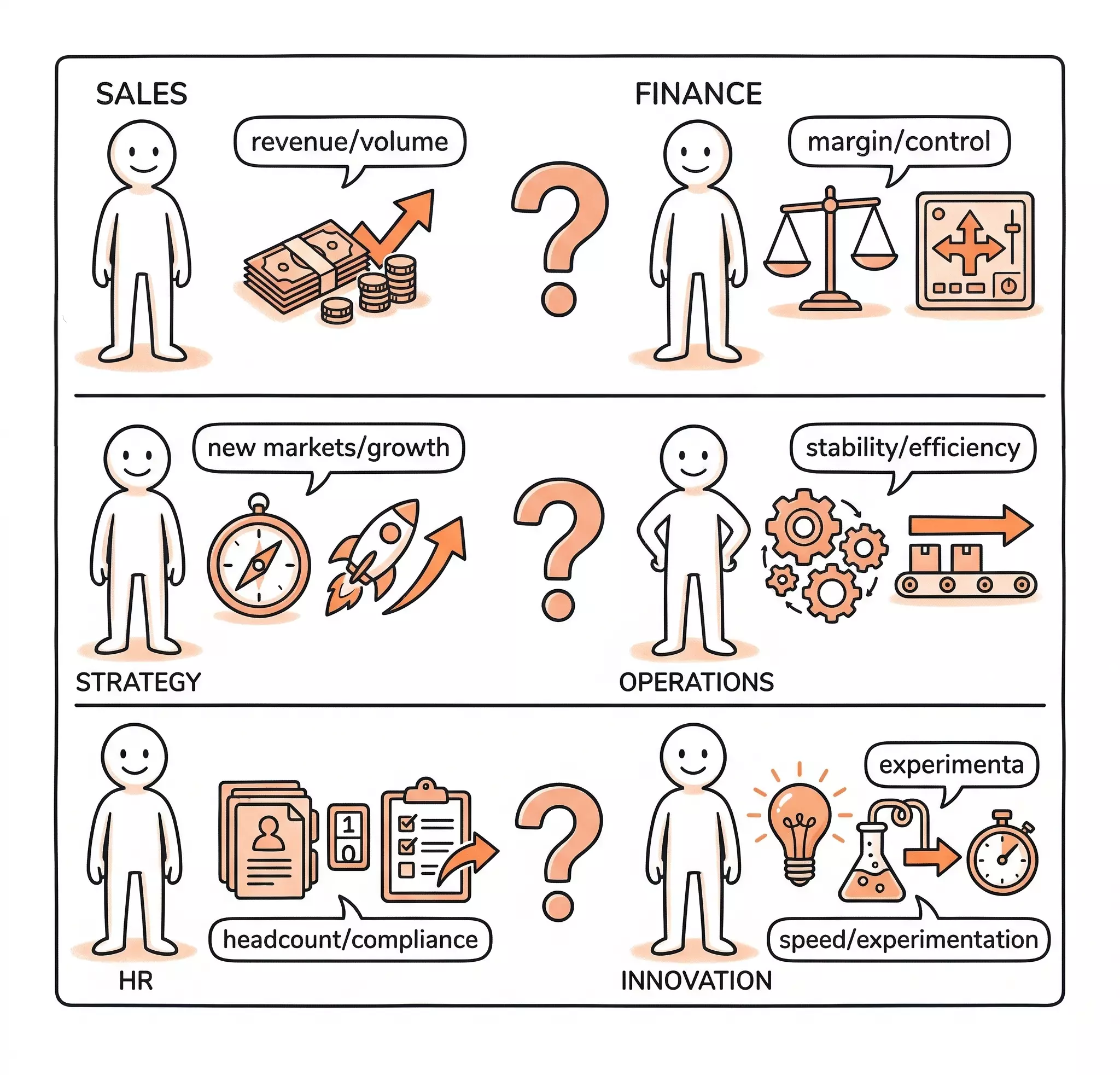
The pattern in each case is identical. A function optimizing correctly for its local environment produces an outcome that conflicts with another function optimizing correctly for its local environment. The conflict is not a failure of either function. It's the output of a system in which no one ever designed the environment where those functions operate together.
This is Coordinated Dysfunction. And it's not an edge case. It's the default output of every organization that grew faster than it designed.
Why Every Restructure Fails to Fix It.
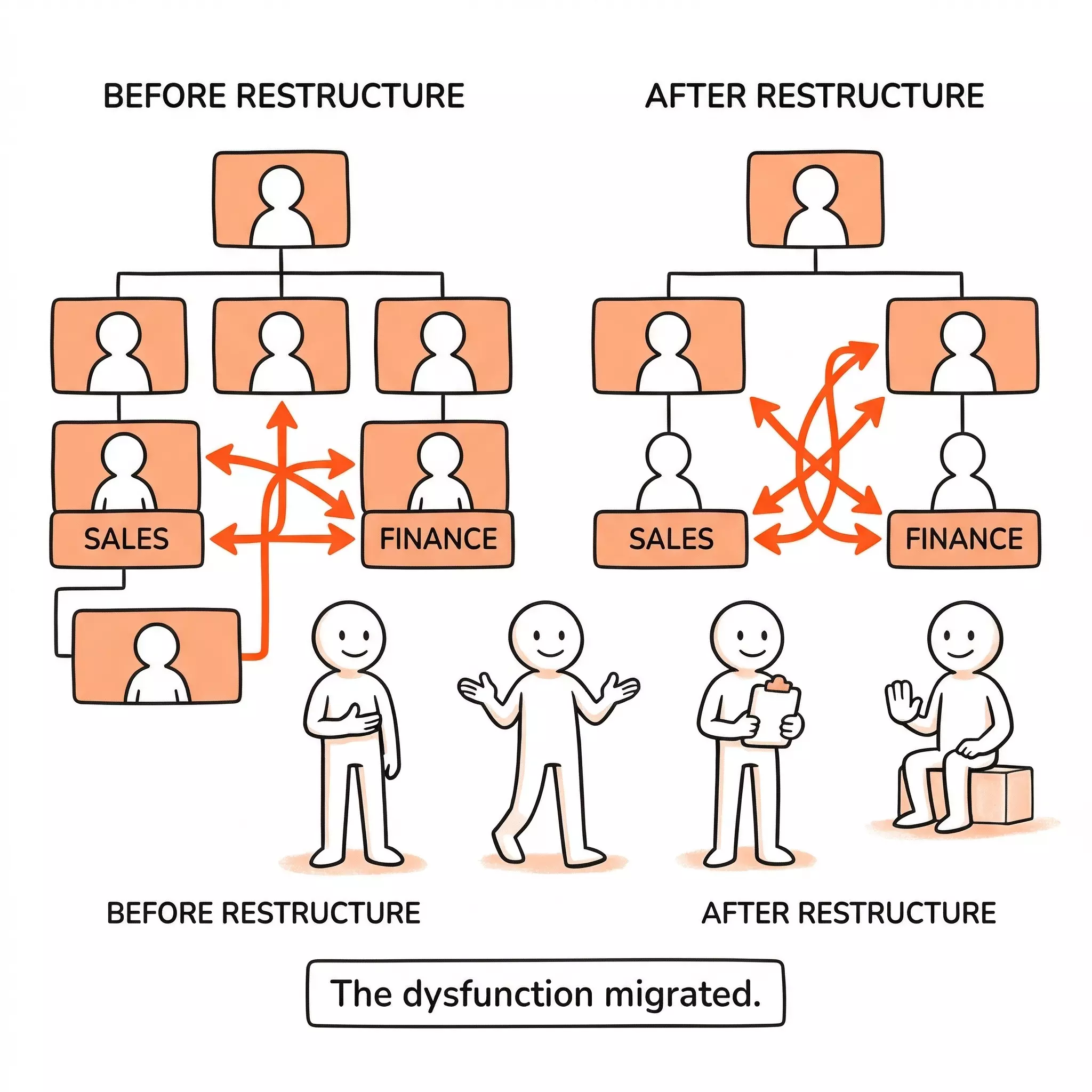
The instinct when Coordinated Dysfunction becomes visible is to restructure. Move the reporting lines. Create cross-functional teams. Hire a Chief of Staff or a COO whose job is to sit in the gap. Put sales and finance under the same leader so they're forced to align.
These interventions aren't wrong. But they are downstream of the actual problem.
Because the dysfunction isn't in the org chart. It's in the incentive structures that sit underneath the org chart — the ones that determine what each function optimizes for when their career, their compensation, and their budget are on the line. Move the boxes without touching those structures and the dysfunction doesn't disappear. It migrates. It finds new expression in the new structure. The same conflict resurfaces under new names, with different people, in different meeting rooms.
This is why the quarterly meeting that never resolves keeps not resolving. Not because the people in it aren't capable. Because the environment surrounding that meeting is still selecting for the same locally-optimal behaviors that produced the tension in the first place.
You didn't fix the environment. You rearranged the boxes. The environment kept running.
Why AI Makes This Undeniable.
For most of organizational history, Coordinated Dysfunction was survivable. Slow information, manual processes, and human-speed execution meant the costs of misalignment accumulated gradually. The quarterly meeting was frustrating but manageable.
AI changes this — not by creating Coordinated Dysfunction, but by exposing it and then accelerating it.
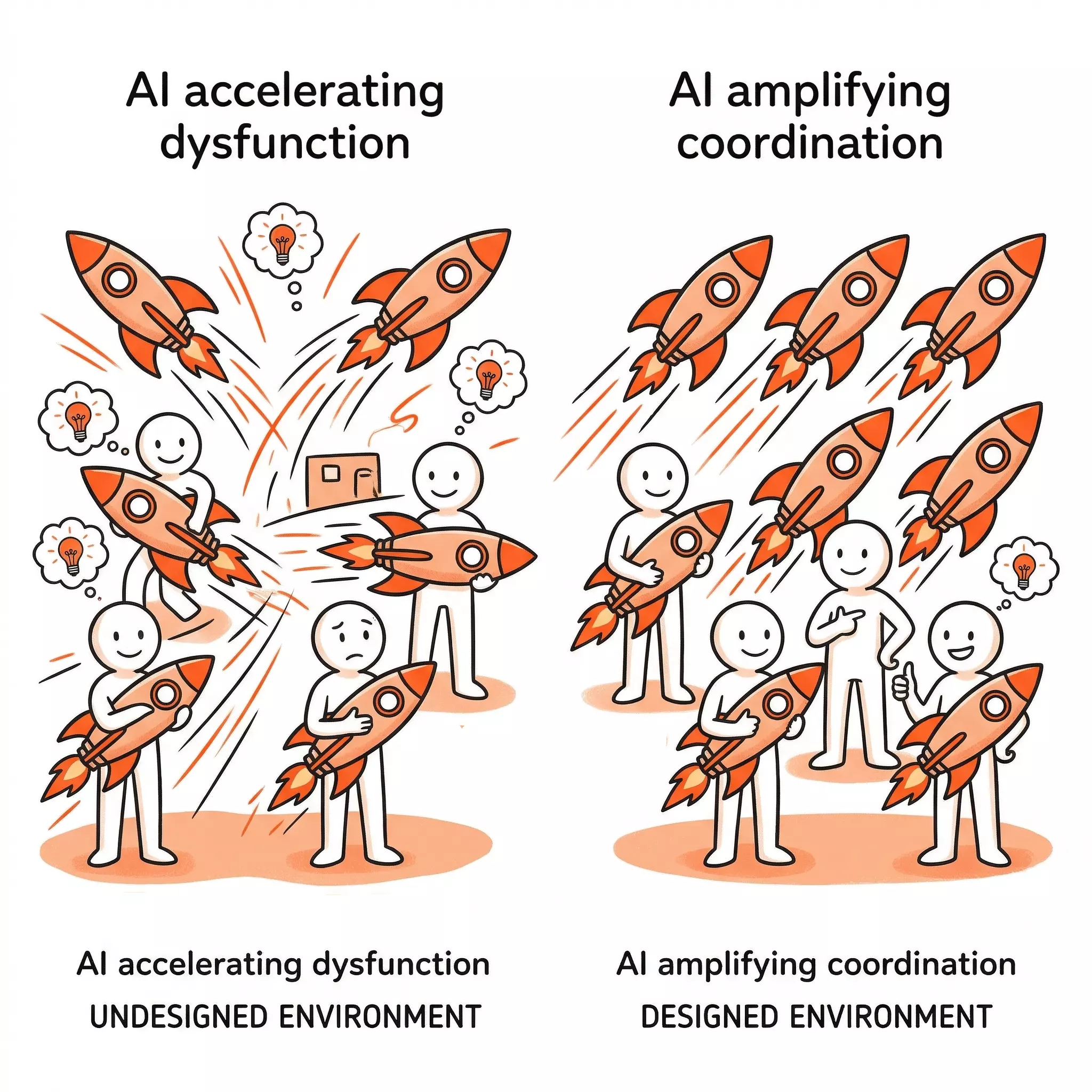
When you give each function an AI tool that optimizes for its local objective, the misalignment between functions becomes visible in real time. The Sales AI closes more low-margin deals faster. The Finance AI flags the margin erosion immediately. The gap that used to play out over a quarter now surfaces in a week. The dysfunction that was survivable at human speed becomes undeniable at machine speed.
But here's the part that matters more: the organization that responds by adding better AI tools to each misaligned function doesn't solve the problem. It accelerates it. You're not fixing the coordination failure — you're giving each locally-optimizing function a faster engine. Coordinated Dysfunction at scale.
The organizations that are pulling ahead right now aren't the ones with the best AI tools. They're the ones that designed the environment before deploying the tools — that aligned what each function optimizes for before automating the optimization.
When you do that, AI doesn't expose the dysfunction. It amplifies the coordination. Every function moving faster — toward the same outcome. That's not an incremental improvement. That's a structural advantage that compounds every quarter.
The Question Worth Asking.
Coordinated Dysfunction is not a diagnosis that requires a consultant to deliver. It's visible in the meetings that never resolve. In the initiatives that stall without a clear cause. In the AI implementations that reproduce the existing friction at higher speed. In the talent that leaves not because of one bad manager but because the environment was structurally incapable of letting them do what they were hired to do.
The question isn't whether Coordinated Dysfunction is running in your organization. For most organizations above a certain size and age, it is. The question is whether anyone has framed it as a design problem — and whether anyone has the mandate to treat it as one.
Because it is a design problem. The dysfunction isn't coming from bad people or bad strategy or bad technology. It's coming from an environment that was never designed to make the right behavior for each function identical to the right behavior for the whole system.
That's a specific, solvable problem. It requires looking honestly at what each function's environment is actually selecting for — not what you intend it to select for, but what it does select for given how people respond to incentives when their career is on the line.