
The core argument
Before you fire the Last Checkpoint, defend them for a moment. Because the conditions that produced them are still running — and they'll produce another one the moment you do.
Start by Defending Them.
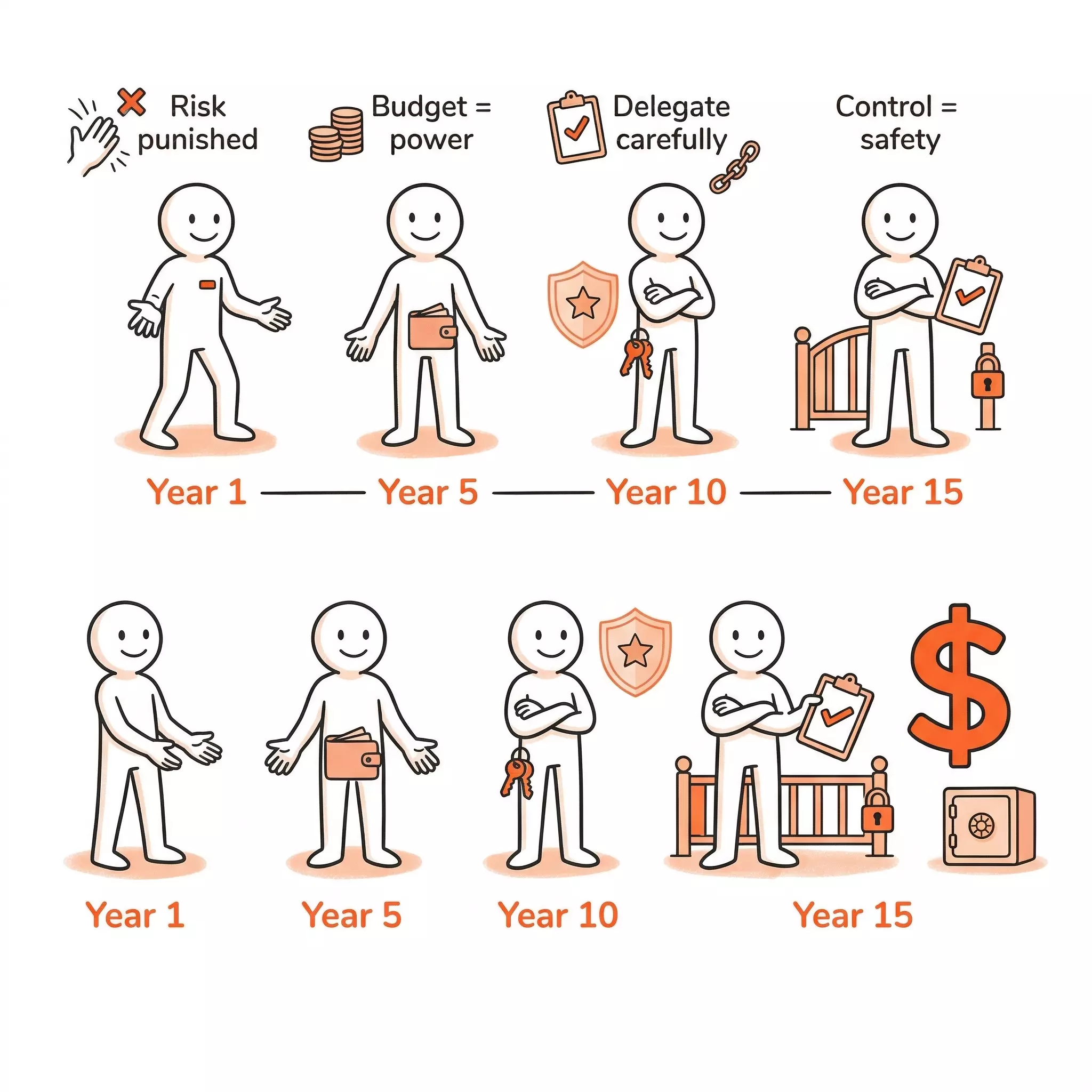
The Last Checkpoint didn't choose to become what they are. They were shaped — gradually, systematically, over years — by an environment that taught them exactly what they needed to do to survive.
Think about what their career actually looked like. They joined an organization that rewarded caution. They watched what happened to leaders who took visible risks and failed. They learned that being in the room mattered more than what happened after the room. They watched budget cycles reward the leaders who protected their headcount and punish the ones who gave it up. They watched teams that delegated get blamed when things went wrong, and teams that held everything close get credit when things went right.
They didn't become the Last Checkpoint by accident. The organization grew them.
The Five Incentives That Build the Last Checkpoint.
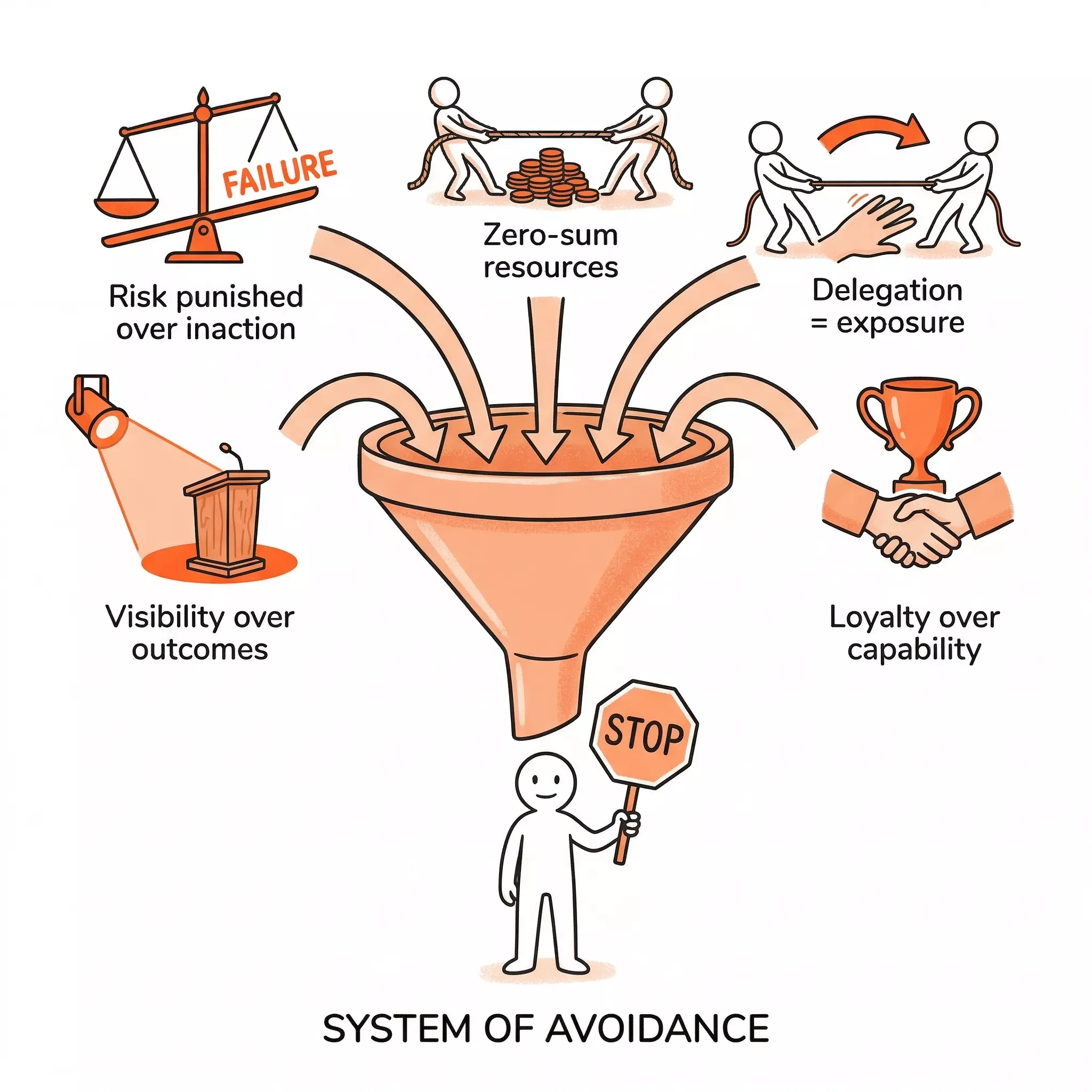
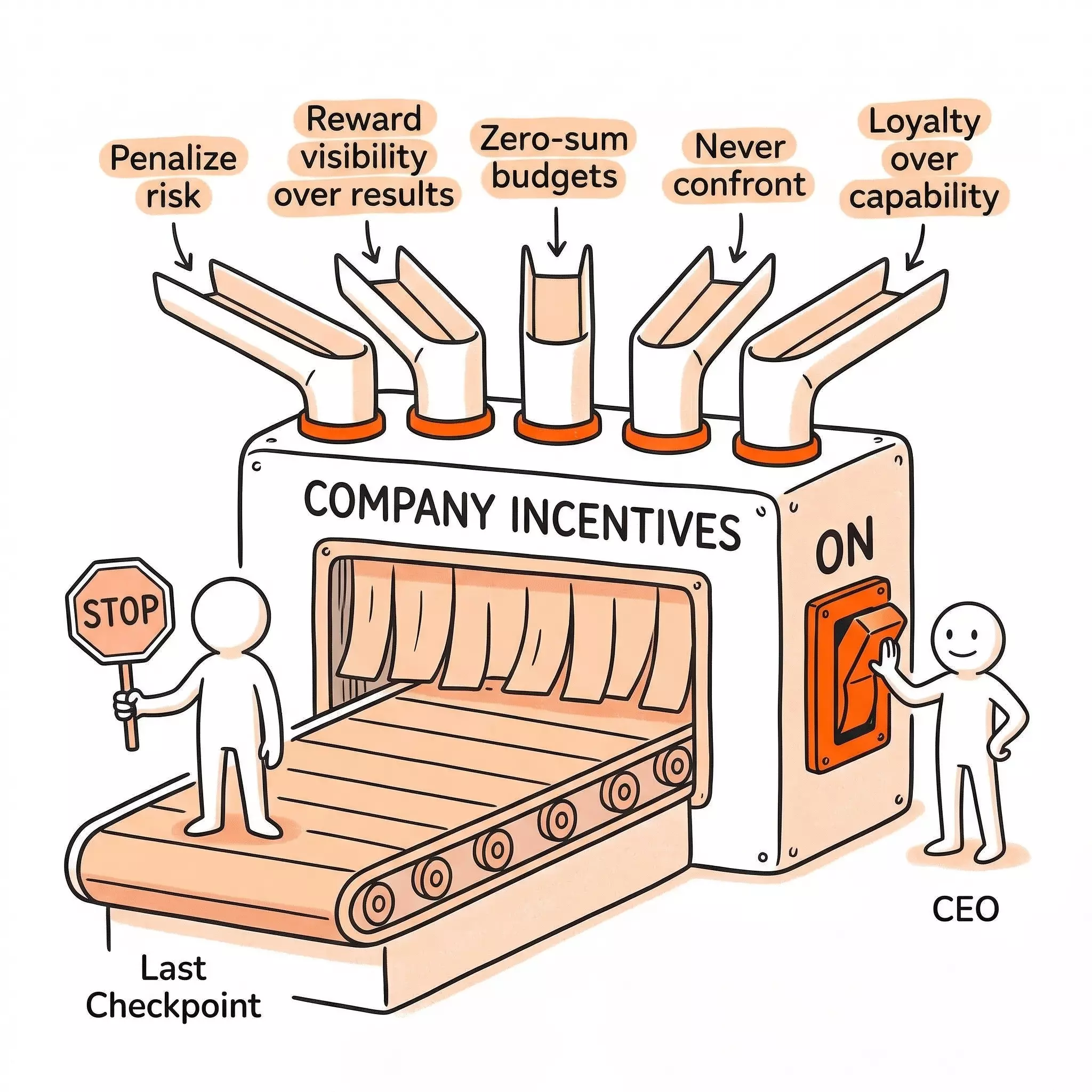
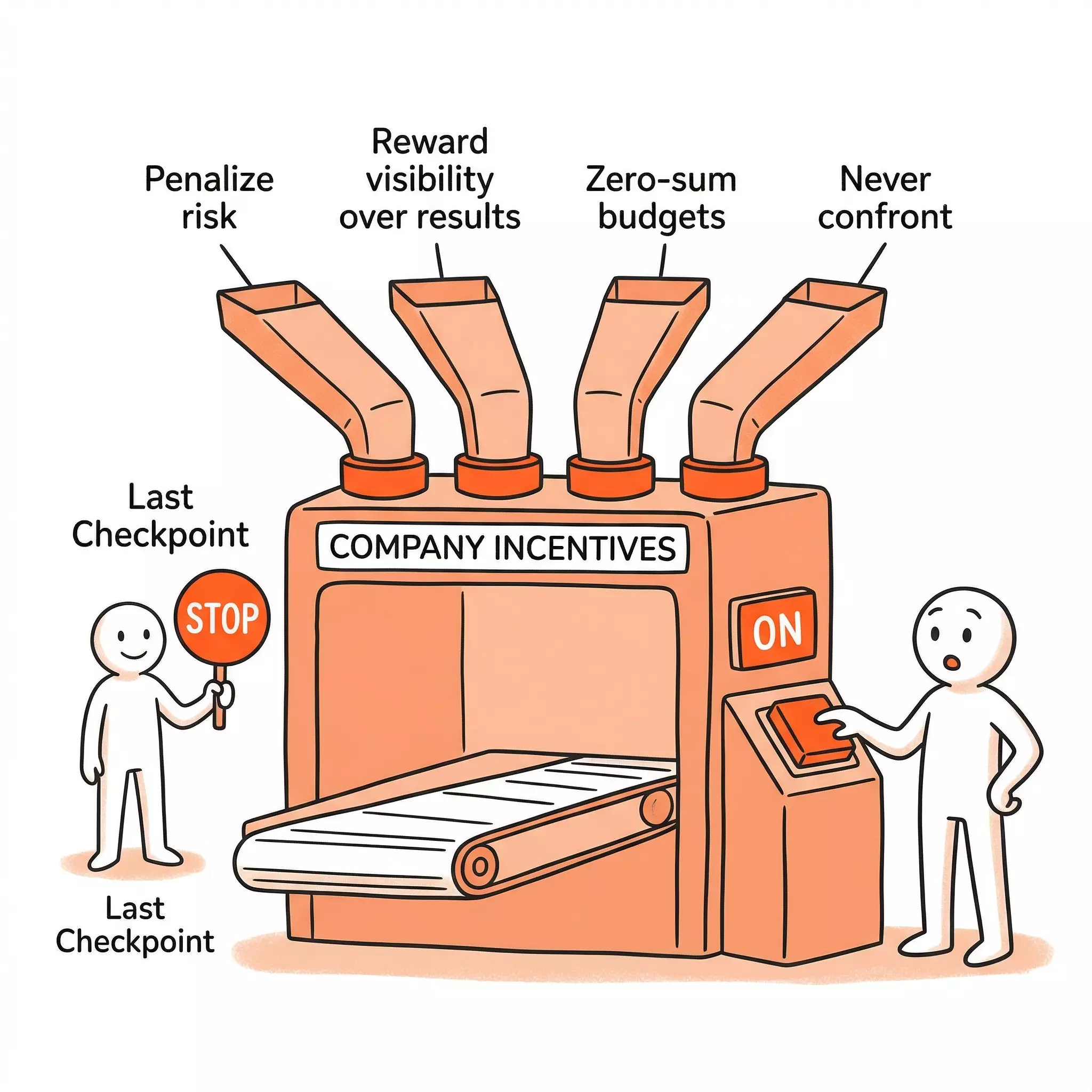
These aren't abstract. They're running in your organization right now, selecting for specific behaviors whether you intend them to or not.
1. Risk is punished harder than inaction. When a leader takes a risk and it fails, it's visible, attributable, and career-limiting. When a leader does nothing and the company misses an opportunity, the cost is diffuse — spread across time, across teams, across market share that erodes slowly enough to blame on something else. The rational response to that asymmetry is to minimize visible risk.
2. Visibility means proximity to decisions, not quality of outcomes. In most organizations, the leaders who advance are the ones who are seen making decisions — not necessarily the ones whose decisions turned out well. Being in the room matters more than being right. So leaders optimize for presence. They insert themselves into decisions not because they add value but because being out of the loop feels like losing ground. Every initiative that moves without their involvement is evidence that they can be routed around. And being routable is dangerous.
3. Resources are zero-sum. When budget cycles are competitive — when your team growing means someone else's team shrinking — every resource conversation becomes territorial. Approving an initiative that another department owns means potentially funding a competitor for next year's allocation. The Last Checkpoint didn't invent this dynamic. They learned it from watching what happened to the leaders who were generous with resources and ended up with smaller teams the following year.
4. Delegation feels like exposure. When a leader delegates and their team succeeds, the credit often flows to the team. When they delegate and their team fails, the accountability flows back to the leader. That asymmetry makes delegation feel irrational — which is why so many experienced leaders quietly stop doing it.
5. Loyalty is rewarded over capability. Organizations that promote based on tenure and relationship proximity create a specific kind of leader: someone whose survival skill is managing relationships upward, not building capability downward. They're excellent at managing their boss. They're less interested in developing their team. Which means the people below them who are building real things are invisible to them at best and threatening at worst.
None of This Was Intentional. That's the Problem.
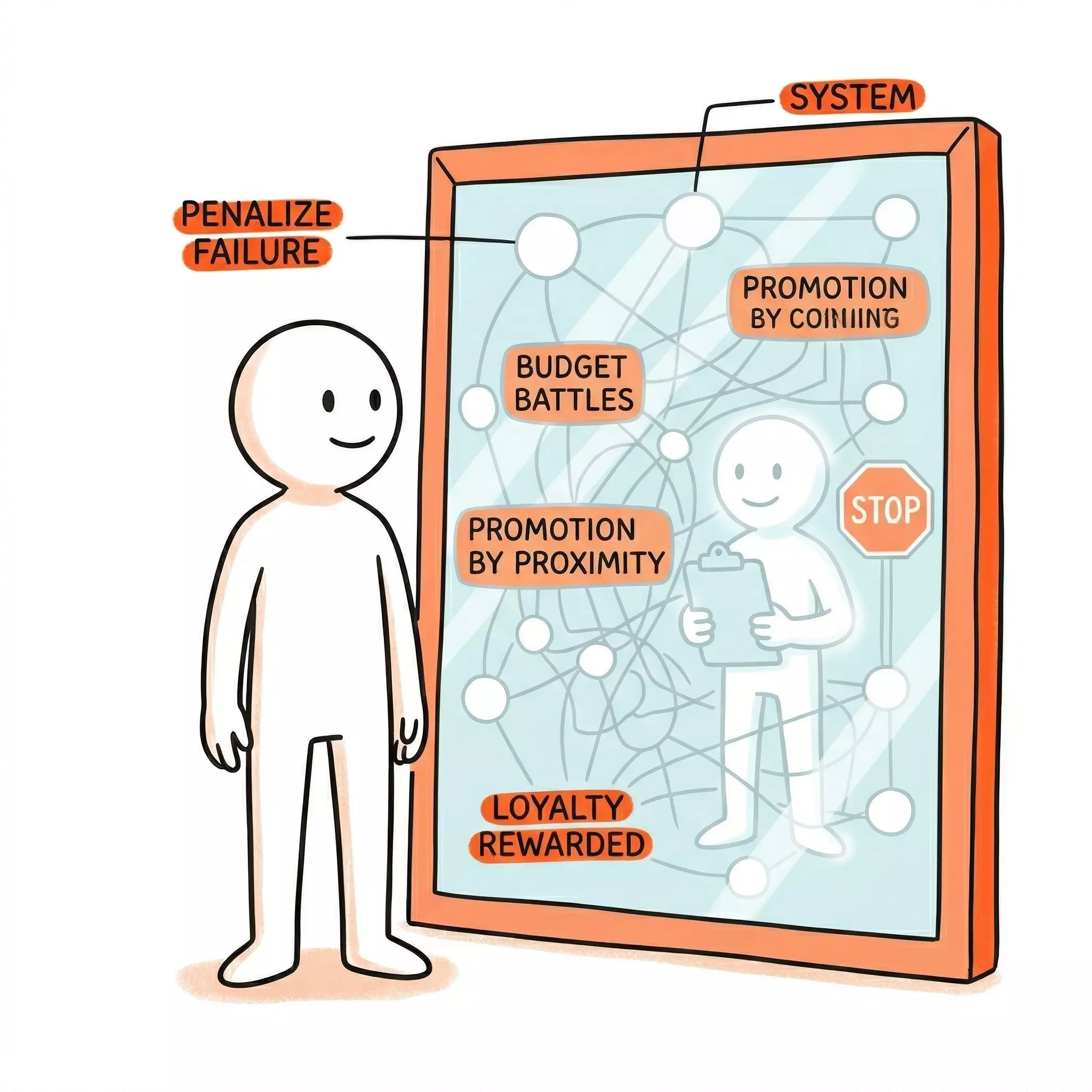
None of those five incentives were designed to produce the Last Checkpoint. They were designed for different goals — risk management, resource allocation, accountability — and they produced this outcome as a side effect.
That matters because it means you can't fix it by finding the right person. You have to fix the environment. And fixing the environment means being willing to look at what your performance system is actually selecting for — not what you intend it to select for.
The test. Take any one of the five incentives above and ask: how does my organization currently handle this? Not in policy. In practice — in what actually happens when a leader takes a visible risk and fails, or when they delegate and their team underdelivers, or when they share budget and end up with less the following year. The answer tells you which version of this leader you're growing right now.
What AI Actually Changes About This Equation.
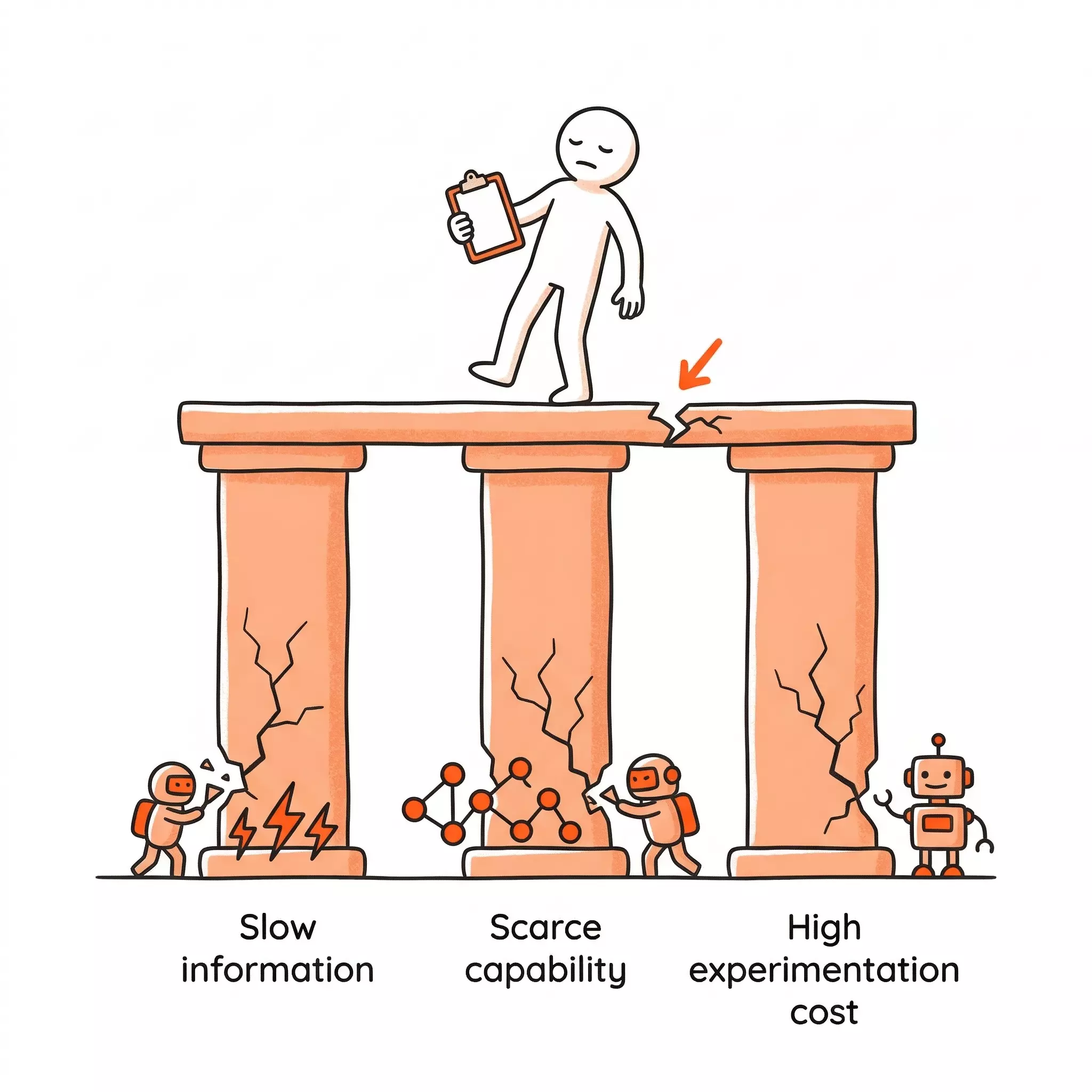
The Last Checkpoint thrives in environments where information is slow, capability is scarce, and the cost of experimentation is high. Those conditions made control rational. They made centralized approval logical.
AI is systematically dismantling all three conditions.
Information is no longer slow — an operator with the right tools can surface, analyze, and act on data without routing it through three layers of approval. Capability is no longer scarce — the gap between what a skilled individual can build alone and what used to require a team has collapsed. The cost of experimentation has dropped to nearly zero for many classes of problem.
In that environment, the incentive structure that built the Last Checkpoint doesn't just produce a suboptimal leader. It produces an active drag on everything the organization is trying to do.
And here's what makes this moment different: the gap is now visible in real time. You can watch a competitor ship something in a week that your internal process would take a quarter to approve. The cover story — "we're being appropriately cautious" — is running out of room.
The Design Question Nobody Is Asking.
Most organizations approach this as a talent problem. Find better leaders. Hire more capable people. Build a culture of innovation.
Those things are not wrong. But they're downstream of the real question.
The real question is structural: if you rebuilt your performance environment from scratch today — your incentive structures, your promotion criteria, your resource allocation process, your definitions of accountability — what leadership archetype would it produce?
Not what you intend it to produce. What it would actually produce, given how humans respond to incentives when their career is on the line.
Because whatever that answer is, you're already growing it. Right now. In the people who are watching how decisions get made, what gets rewarded, and what gets ignored. They're learning the rules of survival in your organization, and they will optimize for those rules whether or not the rules are the ones you meant to write.
The Last Checkpoint is not an anomaly. They're the most accurate diagnostic tool your organization has. They're showing you exactly what your environment selects for. The only question is whether you're ready to read the result.
The organizations that close this gap won't do it by finding better people. They'll do it by designing environments where the right behavior is also the obvious behavior — where the incentives and the outcomes finally point in the same direction.